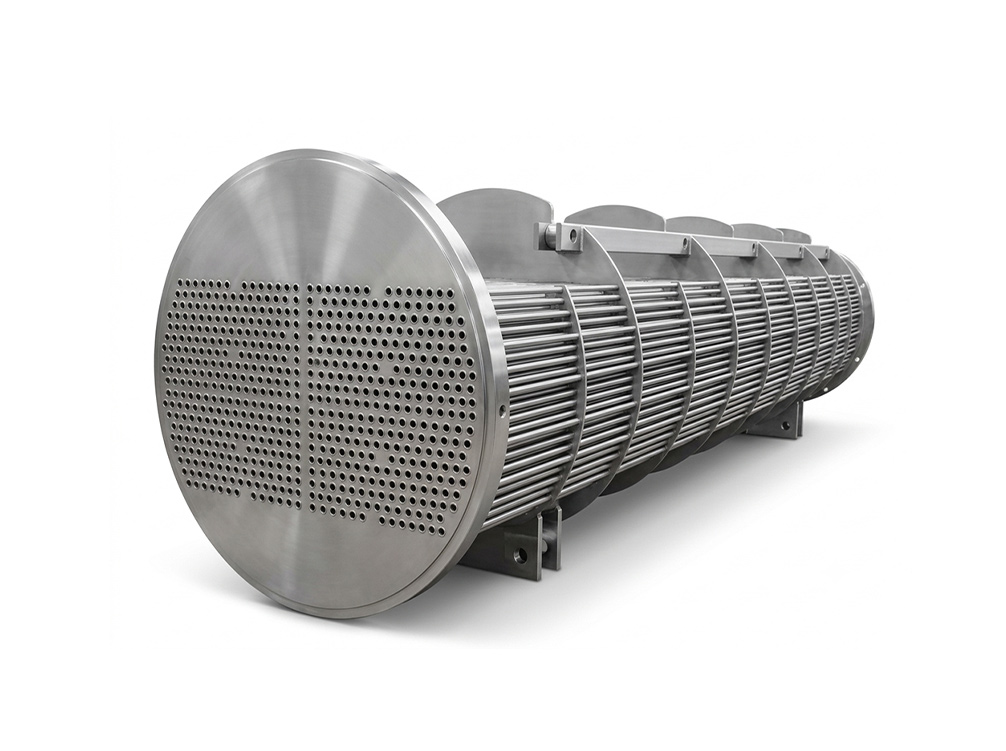
Selecting a reliable shell and tube heat exchanger supplier is an important decision for industrial facilities, engineering contractors, and OEM equipment manufacturers. The right heat exchanger must meet thermal performance requirements while supporting safe operation, reasonable maintenance costs, and long-term equipment reliability.
Shell and tube heat exchangers are used in chemical processing, industrial refrigeration, power generation, HVAC, heat recovery, food processing, and many other applications. However, not every manufacturer specializes in the same operating conditions, materials, construction methods, or industry requirements.
This guide introduces 10 shell and tube heat exchanger suppliers with documented products or relevant manufacturing capabilities. It also explains how to compare suppliers, evaluate heat exchanger configurations, and prepare a technical request for quotation (RFQ).
Whether you need a custom industrial heat exchanger, a replacement tube bundle, or a complete thermal management solution, the objective is to identify a supplier whose capabilities match your actual project requirements.
Editorial note: This guide is published by Changzhou Aidear Refrigeration Technology Co., Ltd., which is included among the suppliers discussed. Companies are listed alphabetically, not ranked by market share, revenue, product quality, or overall performance. The descriptions are based primarily on publicly available manufacturer information and are not independent performance-test results. Product availability, certifications, and project-specific capabilities should be confirmed directly with each supplier.
1. Why Supplier Selection Matters for Shell and Tube Heat Exchangers
A shell and tube heat exchanger transfers thermal energy between two fluid streams through the walls of a tube bundle. One fluid flows through the tubes, while the other flows through the surrounding shell.
The two fluid streams normally remain physically separated, allowing heat transfer without direct mixing during proper operation.
The equipment can be configured for liquid-to-liquid heat transfer, gas cooling, condensation, evaporation, and other industrial duties.
1.1 Thermal Performance and Operating Reliability
The performance of a shell and tube heat exchanger depends on several interacting design factors:
Required heat duty and inlet/outlet temperatures
Mass flow rates and fluid properties
Available heat transfer surface area
Overall heat transfer coefficient
Tube diameter, length, arrangement, and number of passes
Shell-side flow distribution and baffle configuration
Allowable pressure drop
Fouling resistance and operating conditions
An undersized exchanger may fail to achieve the required outlet temperature. An excessively conservative design may increase equipment cost, occupy unnecessary space, or create operating difficulties.
Reliable thermal design therefore requires more than selecting a nominal heat transfer area. It should consider the complete operating envelope, including part-load and potential future operating conditions.
1.2 Long-Term Cost and Maintainability
The initial purchase price is only one component of heat exchanger cost.
Industrial buyers should also evaluate installation requirements, pump energy consumption, cleaning frequency, inspection access, spare parts availability, and potential production interruptions.
For example, an exchanger with a lower initial price may not be the most economical option if its construction makes routine cleaning difficult in a fouling-prone application.
The best supplier is not necessarily the one offering the lowest quotation. It is the one capable of delivering a technically suitable and commercially sustainable solution.
2. How We Selected These 10 Suppliers
The companies in this guide were selected for their publicly documented shell and tube or closely related multitube heat exchanger offerings.
The selection considers five practical dimensions.
2.1 Product Specialization
Suppliers were considered based on whether they publish information about relevant shell and tube configurations, such as industrial process exchangers, sanitary multitube exchangers, condensers, U-tube exchangers, or replacement equipment.
2.2 Engineering and Customization
Custom heat exchanger projects may require specific materials, connections, tube arrangements, mechanical configurations, and design documentation.
Manufacturers offering engineered solutions can be particularly relevant when standard catalog models cannot meet the operating requirements.
2.3 Industry Applications
Different manufacturers focus on different markets.
Some offer solutions for refining and petrochemical processing, while others concentrate on industrial cooling, refrigeration, HVAC, food processing, pharmaceutical manufacturing, or thermal utility systems.
2.4 Maintenance and Lifecycle Support
Supplier evaluation should include access to technical documentation, replacement components, inspection procedures, and maintenance assistance.
Specific services should be confirmed for the intended delivery region.
2.5 Verification and Limitations
Official product pages were prioritized when describing supplier capabilities.
This article does not assign unsupported numerical performance ratings or assume that every supplier possesses the same certifications.
The following list is a practical research shortlist rather than an audited global ranking.
3. Comparison of 10 Shell and Tube Heat Exchanger Suppliers
The table below provides a starting point for identifying suppliers according to their publicly described product focus.
| Supplier | Documented Product Focus | Potential Buyer Fit |
| Aidear | Custom shell and tube heat exchangers and refrigeration equipment | Industrial cooling, refrigeration, HVAC, and custom thermal projects |
| Alfa Laval | Industrial and process shell and tube heat exchangers | Petrochemical, energy, marine, and process applications |
| API Heat Transfer | Basco custom, fixed-tubesheet, and U-tube exchangers | Industrial process systems and engineered heat transfer |
| Enerquip | Industrial and sanitary shell and tube exchangers | Food, pharmaceutical, chemical, and sanitary processing |
| GEA | VARITUBE multitube heat exchangers | Food, beverage, dairy, and process heating |
| HRS Heat Exchangers | Corrugated-tube and industrial multitube systems | Process heating, cooling, food, and environmental applications |
| Kelvion | Standardized and customized shell and tube exchangers | Industrial cooling, refrigeration, marine, and energy applications |
| Metalforms Heat Transfer | Conventional and TWISTED TUBE® heat exchangers | Refining, petrochemical, process optimization, and retrofits |
| Perry Products | Custom shell and tube exchangers, repairs, and replacements | Industrial process equipment and replacement projects |
| Xylem | Bell & Gossett U-tube shell and tube exchangers | HVAC, commercial heating, and hydronic thermal systems |
How to use this comparison: Identify two or three suppliers with product lines relevant to your application, then request quotations using the same process data and technical requirements. The table describes potential suitability, not a guarantee of availability or performance.
4. Detailed Profiles of the 10 Suppliers
4.1 Aidear — Custom Heat Transfer and Refrigeration Solutions
Company: Changzhou Aidear Refrigeration Technology Co., Ltd.
Location: Changzhou, Jiangsu Province, China
Established: 2016
Aidear manufactures heat exchangers and refrigeration equipment for industrial applications. Its portfolio includes shell and tube heat exchangers, finned tube heat exchangers, microchannel heat exchangers, dry coolers, air coolers, and other refrigeration-related equipment.
For shell and tube applications, Aidear provides product options intended for heating, cooling, condensation, and industrial heat transfer duties.
The company also offers heat exchanger design services to support application-specific equipment selection and customization.
Relevant capabilities to discuss:
Custom heat exchanger configuration based on project requirements
Material selection according to the intended operating environment
Integration with industrial cooling and refrigeration systems
Engineering support for heat transfer applications
Coordination of customized equipment requirements
Aidear may be worth evaluating for buyers sourcing customized heat transfer equipment from China, particularly when shell and tube exchangers form part of a broader refrigeration or industrial cooling project.
As with any custom manufacturer, purchasers should request project-specific confirmation of materials, design codes, testing procedures, technical documentation, and delivery schedules.
Explore Aidear's Shell and Tube Heat Exchangers or learn more about its Heat Exchanger Design Services.
4.2 Alfa Laval — Industrial and Process Heat Transfer
Company: Alfa Laval
Headquarters: Sweden
Alfa Laval offers a broad range of heat transfer equipment, including shell and tube heat exchangers designed for demanding industrial operating conditions.
Its shell and tube portfolio includes compact heat exchanger configurations for heating, cooling, evaporation, and condensation.
For process-intensive industries, the company's Olmi product line covers specialized applications in petrochemical plants, refineries, oil and gas production, and power generation.
Relevant capabilities:
Industrial shell and tube heat transfer
Condensation and evaporation applications
Process-specific thermal equipment
Specialized engineering for demanding process conditions
Alfa Laval is relevant to buyers whose projects involve complex thermal duties, established process requirements, or integration with industrial energy systems.
Official reference: Alfa Laval Shell-and-Tube Heat Exchangers.
4.3 API Heat Transfer — Engineered Basco Shell and Tube Exchangers
Company: API Heat Transfer
Headquarters: United States
API Heat Transfer supplies engineered heat transfer equipment through its Basco product range.
Its shell and tube portfolio includes custom designs, standardized fixed-tubesheet units, and U-tube configurations for industrial heating and cooling.
The company publishes information about materials, tube arrangements, multiple-pass configurations, and application-specific engineering.
Relevant capabilities:
Custom shell and tube heat exchanger design
Fixed-tubesheet and U-tube construction
Multiple tube-side pass arrangements
Material options for varied process requirements
Industrial cooling and process heat transfer
API Heat Transfer is particularly relevant to buyers requiring detailed mechanical configurations, engineered equipment, or integration with existing industrial systems.
Official reference: API Heat Transfer — Custom Shell and Tube Heat Exchangers.
4.4 Enerquip — Industrial and Sanitary Heat Exchangers
Company: Enerquip Thermal Solutions
Location: United States
Enerquip designs and manufactures shell and tube heat exchangers for industrial and sanitary processing applications.
Its products serve industries such as food and beverage, pharmaceuticals, chemical processing, and industrial utilities.
The company offers standard and customized equipment, with material, surface-finish, connection, and mechanical design options depending on the application.
Relevant capabilities:
Sanitary shell and tube configurations
Stainless steel and specialized alloy options
Steam heating and liquid-to-liquid heat transfer
Custom configurations for industrial processes
Cleaning and maintenance considerations
Enerquip may be a suitable supplier to evaluate when hygienic design, material traceability, surface finish, or process-specific compliance is important.
Official reference: Enerquip Shell and Tube Heat Exchangers.
4.5 GEA — Multitube Heat Exchangers for Hygienic Processing
Company: GEA Group
Headquarters: Germany
GEA supplies process equipment and systems for food, beverage, dairy, and other industrial applications.
Its VARITUBE product range includes multitube heat exchanger configurations intended for heating, cooling, pasteurization, and product-to-product heat recovery.
Certain designs are intended for applications involving viscous products, particles, fibers, or hygienic processing requirements.
Relevant capabilities:
VARITUBE multitube heat exchangers
Hygienic product heating and cooling
Product-to-product heat recovery
Process-specific configurations for food and beverage applications
Integration with larger processing systems
GEA may be especially relevant when the heat exchanger is part of a complete hygienic processing line rather than a conventional general-purpose industrial cooling installation.
Official reference: GEA VARITUBE Tubular Heat Exchangers.
4.6 HRS Heat Exchangers — Corrugated-Tube Technology
Company: HRS Heat Exchangers
Origin: United Kingdom
HRS Heat Exchangers offers industrial multitube systems with a focus on thermal processing and heat recovery.
Its portfolio includes stainless steel shell and tube exchangers featuring corrugated tube technology.
Depending on the product range, these systems are designed for process heating, cooling, gas applications, and thermal recovery.
Relevant capabilities:
Corrugated-tube heat exchanger designs
Industrial multitube configurations
Steam-to-water and process heating applications
Thermal recovery and industrial cooling
Application-specific heat transfer solutions
Corrugated tubes can influence flow behavior and heat transfer performance, although the actual benefit depends on fluid properties, flow velocity, pressure drop, and operating conditions.
HRS is relevant to buyers evaluating enhanced tube geometries or industrial heat transfer duties where fouling and cleanability require careful consideration.
Official reference: HRS Industrial Multitube Heat Exchangers.
4.7 Kelvion — Industrial Cooling and Shell and Tube Equipment
Company: Kelvion
Headquarters: Germany
Kelvion supplies heat exchange equipment across industrial cooling, refrigeration, energy, marine, and other thermal management applications.
Its shell and tube portfolio includes standardized, modular, and customized configurations.
Depending on the product range, exchangers can incorporate plain tubes, low-finned tubes, or enhanced heat transfer surfaces.
Relevant capabilities:
Industrial cooling applications
Shell and tube heat exchanger configurations
Standardized and customized product options
Compact heat transfer solutions
Refrigeration and energy-related equipment
Kelvion may be a useful option for engineering teams seeking industrial heat transfer equipment with a range of standard and application-specific configurations.
Official reference: Kelvion Shell & Tube Single Heat Exchangers.
4.8 Metalforms Heat Transfer — Conventional and TWISTED TUBE® Technology
Company: Metalforms Heat Transfer
Location: United States
Metalforms Heat Transfer supplies conventional shell and tube heat exchangers as well as specialized thermal equipment for process industries.
Its product portfolio includes BOS-HATTEN® shell and tube equipment and TWISTED TUBE® technology.
The TWISTED TUBE® product line was previously associated with Koch Heat Transfer. Metalforms assumed ownership of the relevant technology and product-related intellectual property following the 2024 business transfer.
Relevant capabilities:
Conventional shell and tube heat exchangers
TWISTED TUBE® technology
Replacement and retrofit applications
Refinery and petrochemical thermal processing
Heat transfer enhancement solutions
Enhanced tube geometries may provide advantages in certain applications, but thermal performance, pressure drop, cleanability, and overall project economics should be assessed individually.
Metalforms is especially relevant to buyers considering process-equipment retrofits or the replacement of existing heat exchanger bundles.
Official reference: Metalforms Shell and Tube Heat Exchangers.
4.9 Perry Products — Custom Fabrication and Replacement Equipment
Company: Perry Products Corporation
Location: United States
Perry Products specializes in shell and tube heat exchanger manufacturing, mechanical engineering, and equipment replacement.
The company offers custom heat exchanger design and fabrication services, including projects requiring compatibility with existing process equipment.
Its published capabilities also include repair, replacement components, and thermal and mechanical engineering support.
Relevant capabilities:
Custom shell and tube heat exchanger fabrication
Mechanical design and thermal evaluation
Replacement equipment and tube bundles
Equipment repair and modification
Industrial process applications
Perry Products is worth considering when replacing an existing exchanger, managing equipment modernization, or sourcing a new exchanger with specific mechanical and dimensional constraints.
Official reference: Perry Products — Shell and Tube Heat Exchangers.
4.10 Xylem — Bell & Gossett Shell and Tube Heat Exchangers
Company: Xylem
Product Brand: Bell & Gossett
Headquarters: United States
Xylem offers shell and tube heat exchangers through its Bell & Gossett product portfolio.
Its equipment includes U-tube heat exchangers intended for steam-to-liquid and liquid-to-liquid heat transfer applications.
These configurations are relevant to commercial and industrial hydronic systems, heating applications, and associated thermal utility equipment.
Relevant capabilities:
U-tube shell and tube heat exchangers
Steam-to-liquid heating
Liquid-to-liquid heat transfer
Hydronic system applications
Removable-bundle configurations in specified product ranges
Xylem may be suitable for buyers working on commercial heating, HVAC, or hydronic projects with requirements aligned to its published product range.
Official reference: Xylem Bell & Gossett U-Tube Heat Exchangers.
5. How to Choose the Right Shell and Tube Heat Exchanger Manufacturer
A supplier shortlist is only the starting point. Engineering and procurement teams should evaluate each manufacturer against the same project-specific criteria.
5.1 Thermal Design and Hydraulic Performance
The first step is to define the required heat duty.
For a single-phase fluid with approximately constant specific heat capacity, the sensible heat duty can be estimated using:
Q = ṁ × cp × ΔT
Where:
For phase-changing fluids or cases where thermophysical properties vary significantly, calculations should use appropriate enthalpy differences and process conditions.
The manufacturer should evaluate the thermal design using suitable heat transfer methods and fluid property data.
Important considerations include the available temperature driving force, fouling assumptions, and allowable pressure drop.
Buyers should request a thermal design summary rather than relying only on a nominal capacity stated in a product catalog.
5.2 Heat Exchanger Materials and Corrosion Resistance
Material selection affects equipment integrity, service life, and maintenance requirements.
Common construction materials include carbon steel, stainless steel, copper alloys, and titanium. Other alloys may be appropriate for specialized conditions.
Selection should account for:
Fluid composition and concentration
Chloride content and other corrosive constituents
Operating and design temperatures
Pressure requirements
Expected cleaning chemicals
Material compatibility with process conditions
Stainless steel is not automatically suitable for every corrosive environment. In particular, chloride-containing media can require careful assessment of corrosion mechanisms and operating temperature.
A reliable supplier should explain why the proposed material is suitable for the specific application.
5.3 Maintenance Access and Mechanical Configuration
Shell and tube heat exchangers are available in multiple construction types.
The selected configuration affects thermal expansion accommodation, cleaning access, maintenance work, and equipment cost.
5.3.1 Fixed-Tubesheet Heat Exchangers
In a fixed-tubesheet design, the tube sheets are attached to the shell.
This construction can be mechanically straightforward and economical for suitable operating conditions.
However, the tube bundle is generally not removable from the shell. Mechanical access to the shell side can therefore be limited.
Tube-side cleaning may be possible depending on tube geometry, channel access, and the cleaning method.
5.3.1.1 What to Confirm Before Specifying Chemical Cleaning
If shell-side fouling is expected, purchasers should confirm whether chemical cleaning is compatible with the equipment materials and process contaminants.
The cleaning procedure should also account for fluid isolation, chemical compatibility, drainage, and waste handling.
A fixed-tubesheet design should not be selected solely on the assumption that the entire tube bundle can be removed for inspection.
5.3.2 U-Tube Heat Exchangers
U-tube exchangers allow differential thermal expansion through the curved tube arrangement.
Many U-tube designs use removable bundles, improving access to the shell side.
However, mechanical cleaning of the U-bends can be more difficult than cleaning straight tubes.
5.3.3 Floating-Head Heat Exchangers
Floating-head configurations allow axial thermal expansion and, in suitable designs, provide removable-bundle access.
They may be useful when shell-side mechanical cleaning or frequent inspection is important.
However, the additional mechanical complexity can increase fabrication and maintenance requirements.
Practical recommendation: Ask each supplier to explain the proposed exchanger construction and demonstrate how the equipment will be inspected, cleaned, and maintained.
5.4 Design Standards and Quality Documentation
Standards and regulatory requirements should be established at the beginning of the procurement process.
For shell and tube heat exchangers, buyers may need to consider:
TEMA standards: Mechanical design guidance and requirements for tubular heat exchangers.
ASME Boiler and Pressure Vessel Code, Section VIII: Pressure vessel design and construction requirements where applicable.
PED 2014/68/EU: European pressure equipment requirements, when relevant to the equipment and market.
Hygienic design requirements: Relevant industry-specific requirements for food, pharmaceutical, or other sanitary applications.
Not every standard applies to every project. Requirements depend on equipment classification, pressure, fluid hazards, installation location, and the governing regulatory framework.
Buyers should request confirmation of the applicable design code and the manufacturer's ability to supply the required documentation.
Useful documents may include material certificates, design calculations, fabrication drawings, inspection records, pressure test reports, and other records specified in the purchase agreement.
For technical background, consult the official Tubular Exchanger Manufacturers Association (TEMA) and ASME Section VIII resources.
5.5 Manufacturing Quality and Inspection
Before placing an order, assess how the supplier controls material quality, fabrication accuracy, welding, testing, and final inspection.
Questions worth asking include:
What material identification and traceability records are available?
What welding qualifications and inspection procedures apply?
Which pressure or leakage tests will be performed?
Can the supplier provide general arrangement drawings for review?
What quality documents will accompany the equipment?
How are nonconformities and corrective actions handled?
A manufacturer's general quality statements should not substitute for project-specific evidence.
5.6 Delivery, Communication, and After-Sales Service
Technical compliance alone does not complete the supplier assessment.
For overseas procurement, buyers should also confirm drawing approval procedures, production milestones, packaging, shipping responsibility, documentation language, and spare parts support.
Lead time should be confirmed in writing for the exact configuration, not assumed from a generic product advertisement.
6. Shell and Tube Heat Exchanger RFQ Checklist
A complete RFQ helps manufacturers produce technically comparable quotations.
Incomplete process data can lead to different design assumptions, making prices and performance difficult to compare.
| Required Information | What Buyers Should Provide |
| Application | Cooling, heating, condensation, evaporation, or heat recovery |
| Process fluids | Fluid names, composition, concentration, and relevant properties |
| Flow rates | Required flow rates on both sides, with units |
| Inlet temperatures | Hot-side and cold-side inlet temperatures |
| Required outlet conditions | Target temperatures, vapor fraction, or heat duty |
| Operating pressure | Normal operating pressure on each side |
| Design conditions | Design pressure and temperature for each side |
| Allowable pressure drop | Maximum acceptable pressure loss for both circuits |
| Materials | Preferred or required construction materials |
| Fouling and cleaning | Expected deposits, cleaning methods, and maintenance frequency |
| Design standards | Applicable codes, certification, and inspection requirements |
| Installation details | Space limitations, connection sizes, orientation, and location |
| Project requirements | Quantity, delivery destination, schedule, and documentation |
6.1 Compare Quotations on a Common Technical Basis
When comparing supplier proposals, confirm that the quotations use consistent process conditions.
A lower-priced exchanger may appear attractive but may not include the same material grade, design pressure, inspection scope, accessories, or documentation.
Consider the following factors together:
Thermal duty and outlet temperature compliance
Shell-side and tube-side pressure drop
Material compatibility
Mechanical construction and cleaning access
Applicable design codes and test requirements
Equipment dimensions and installation requirements
Delivery terms and after-sales support
6.2 Evaluate Total Cost of Ownership
Purchase cost should be evaluated alongside expected operating and maintenance costs.
For example, a design that reduces fouling may lower cleaning requirements under some conditions, but the benefit must be evaluated against pressure drop, purchase price, and actual operating data.
Avoid accepting universal savings or payback claims without project-specific calculations.
7. Common Mistakes When Selecting a Supplier
7.1 Choosing Only by Purchase Price
A low quotation does not guarantee the same materials, design margins, testing, or documentation scope.
Always compare technically equivalent offers.
7.2 Assuming All Shell and Tube Designs Are Easy to Clean
Cleaning access depends on the construction type.
Fixed-tubesheet, U-tube, and floating-head arrangements have different maintenance characteristics.
7.3 Ignoring Pressure Drop
Pressure drop affects pumping requirements and can influence process operation.
A heat exchanger should meet thermal performance targets without exceeding the allowable hydraulic limitations.
7.4 Overlooking Fluid Compatibility
Corrosion and fouling risks depend on fluid chemistry and operating conditions.
Material selection should be supported by appropriate engineering assessment.
7.5 Accepting Unsupported Performance Claims
Avoid relying on claims of guaranteed energy savings, unusually long service life, or fixed payback periods without defined operating conditions and supporting evidence.
For major projects, ask suppliers to provide documented calculations and clearly stated performance guarantees.
8. Frequently Asked Questions About Shell and Tube Heat Exchanger Suppliers
8.1 Who Are Some Established Shell and Tube Heat Exchanger Suppliers?
Manufacturers and suppliers with documented relevant product offerings include Alfa Laval, API Heat Transfer, Enerquip, GEA, HRS Heat Exchangers, Kelvion, Metalforms Heat Transfer, Perry Products, Xylem, and Aidear.
These companies serve different markets and should be evaluated according to the project's technical and commercial requirements.
8.2 How Do I Choose Between a Standard and Custom Shell and Tube Heat Exchanger?
Standardized equipment may be suitable when operating requirements fall within a manufacturer's published product range.
Custom engineering may be needed when a project involves unusual fluids, specific materials, restricted installation dimensions, special mechanical arrangements, or demanding thermal conditions.
The final decision should be based on verified thermal and mechanical suitability.
8.3 What Is the Difference Between Fixed-Tubesheet, U-Tube, and Floating-Head Designs?
Fixed-tubesheet designs generally have non-removable tube bundles and may offer relatively straightforward construction.
U-tube designs accommodate thermal expansion through the tube bends, but mechanical cleaning of the bends can be difficult.
Floating-head designs allow thermal expansion and can provide improved shell-side cleaning access, depending on the configuration.
Each type has different cost, maintenance, and mechanical design considerations.
8.4 Which Materials Are Best for Shell and Tube Heat Exchangers?
No single material is suitable for every industrial process.
Carbon steel may be appropriate for compatible noncorrosive duties, while stainless steel, copper alloys, titanium, or specialized alloys may be selected for other service conditions.
Material selection should consider fluid chemistry, temperature, pressure, corrosion mechanisms, and lifecycle requirements.
8.5 What Certifications Should I Request From a Manufacturer?
First determine the standards and legal requirements applicable to your project.
Depending on the application and jurisdiction, this may involve ASME, TEMA design requirements, European pressure equipment requirements, or industry-specific hygienic standards.
Request documented evidence of compliance rather than assuming that every supplier holds every certification.
8.6 How Can I Obtain a More Accurate Quotation?
Provide both fluid streams' flow rates, inlet and outlet conditions, pressure limits, relevant fluid properties, materials, design requirements, and installation constraints.
A complete RFQ allows manufacturers to evaluate the equipment on a consistent technical basis.
9. Conclusion: Select a Supplier Based on Engineering Fit
Choosing between shell and tube heat exchanger manufacturers requires more than comparing brand names or product prices.
Suppliers differ in their engineering capabilities, product configurations, industrial specializations, and service offerings.
For industrial buyers, the most effective selection process begins with clearly defined operating conditions, followed by a technical evaluation of suitable suppliers.
Use the comparison table in this guide to identify relevant manufacturers, review their official product documentation, and request project-specific proposals.
The right heat exchanger is the one that meets your actual thermal, mechanical, maintenance, and commercial requirements—not simply the one with the most prominent brand name.
Request a Custom Shell and Tube Heat Exchanger from Aidear
Are you sourcing a shell and tube heat exchanger for industrial cooling, refrigeration, process heating, or heat recovery?
Changzhou Aidear Refrigeration Technology Co., Ltd. provides heat exchanger products and customized thermal solutions for industrial applications.
Share your operating conditions, required heat duty, fluid information, material preferences, and installation constraints with our team.
We can discuss suitable product configurations and the technical information needed to evaluate your project.
Request a Custom Quote
You can also explore our Shell and Tube Heat Exchanger Product Range or learn about our Engineering and Design Services.

 English
 العربية
 Français
 Русский
 Español
 Português
 Deutsch
 italiano
 日本語
日本語 한국어
한국어 Nederlands
 ไทย
ไทย Polski
 Türkçe
 አማርኛ
አማርኛ ພາສາລາວ
 ភាសាខ្មែរ
 Bahasa Melayu
 ဗမာစာ
ဗမာစာ தமிழ்
தமிழ் Filipino
 Bahasa Indonesia
 magyar
 Română
 Čeština
 Монгол
 қазақ
қазақ Српски
 हिन्दी
 فارسی
فارسی Kiswahili
 Slovenčina
 Slovenščina
 Norsk
Norsk Svenska
 українська
 Ελληνικά
 Suomi
Suomi עברית
עברית Dansk
Dansk اردو
اردو বাংলা
বাংলা Hrvatski
 Oʻzbekcha
 Български
 Hausa
Hausa Кыргызча
 Тоҷикӣ
 తెలుగు
 Türkmençe
 isiZulu


